Nojima Jiro (野島二郎) was born in Osaka in 1938 and grew up in Minoh, at the green northern edge of the city, where he still lives and works today. He studied sculpture at the Kyoto City University of Arts, began with ceramic sculpture, and showed early work at the Nika Exhibition in Tokyo.
In the 1970s he became part of the Kansai avant-garde. He was selected for the 3rd Kobe Suma Rikyū Park Contemporary Sculpture Exhibition (1972), exhibited in「Gendai Bijutsu '73→'74」in Kyoto, held solo exhibitions at Art Core in Kyoto (1975, 1977), and appeared at the Hyōgo Prefectural Museum of Modern Art's「art now '76」. In November 1975 the art journal Bijutsu Techō named him among 78 artists of "the new generation of Japanese contemporary art."
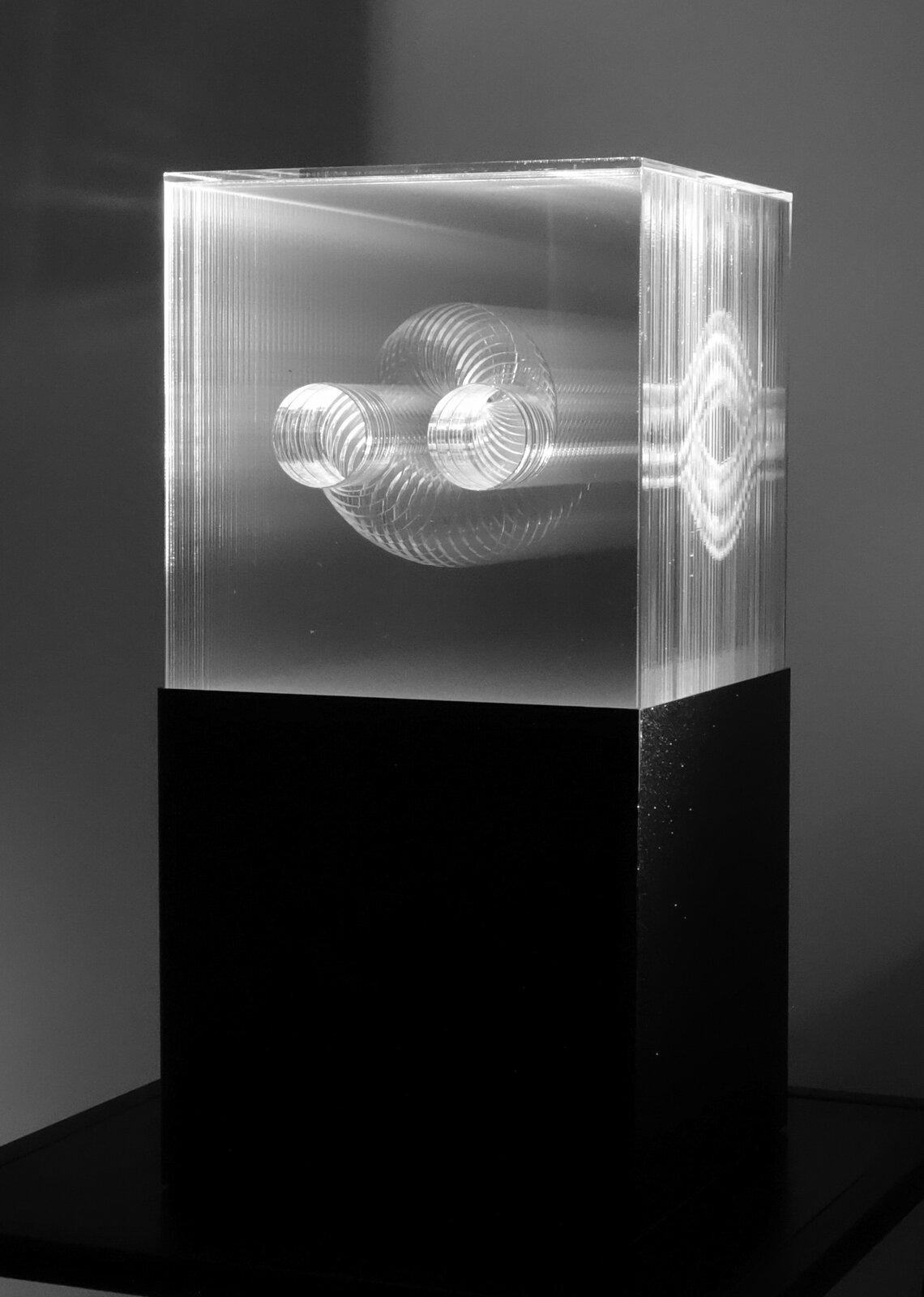
Critics of the time singled out what would become his lifelong signature: the cast illusion. A Kyoto Shimbun reviewer described paired forms of hemispheres, cylinders and cubes, half in polished marble or black granite and half in cast aluminum or bronze, their male and female molds exchanged, so that hard materials appeared to soften, fold and yield. The eye insists it cannot be; the material insists it is.
From the 1980s, his work moved into public space. The city-emblem monument before Minoh City Hall (1983), the stainless ring『Kūkan 21』at the Minoh fire department (1985), works for Kurashiki's machikado sculpture exhibition (1987), and, at the invitation of Mizuno's president, 『Flame』(1992): a 16.5-metre column of artificial crystal threaded with optical fibre, rising through the four-storey atrium of the Mizuno headquarters in Osaka, said to be the only monument of its material in the world. After the Great Hanshin-Awaji Earthquake he made 『Wind, Seven Colors』(1995), a rainbow of stainless steel and glass at the Kobe Nunobiki Herb Garden, one panel engraved so the disaster's lessons are not forgotten. In later years his light sculptures went to sea, installed through the entrance halls and staircases of the Shin Nihonkai ferries SUZURAN, SUISEN, AZALEA and LAVENDER, crossing the Sea of Japan nightly.
He has remained deliberately independent, belonging to no artists' association, while carving, in parallel with the monuments, a quieter gallery of impossible things in wood: barbed wire, draped cloth, a split paprika, the Hand of Buddha, a Gundam. He served as advisor to the historic Kyoto bronze foundry Denrai Kōbō, whose corporate mark he designed, and taught as a lecturer at an art university.
In 2024, in his late eighties, he set down his chisels and took up a pencil. The resulting series, Support one another, in which rings of drawn cylinders hold one another up and none can stand alone, was first exhibited in spring 2025: an exhibition of sculpture in which, for the first time, there was no sculpture at all.
His largest spatial work is a house. Among the rice terraces of Bukit Jati, near Gianyar in Bali, he designed Villa Dandan Bukit: natural materials, open rooms under timber roofs, an infinity pool held out toward Mount Agung. He spends the Japanese summer there, and for the rest of the year the villa welcomes guests through Airbnb, where it is rated 4.97 and named a Guest Favorite.
野島二郎は1938年大阪生まれ。箕面に育ち、いまも箕面で制作を続ける。京都市立芸術大学で彫刻を学び、初期には陶彫を手がけ、二科展に出品した。
1970年代、関西前衛の一員として頭角を現す。第3回神戸須磨離宮公園現代彫刻展入選(1972)、「現代美術 '73→'74」(京都)出品、京都アートコアでの個展(1975、1977)、兵庫県立近代美術館「art now '76」出品。1975年11月には『美術手帖』の特集「明日への10年 日本現代美術の新世代」で78人の作家のひとりに選ばれた。
当時の批評が注目したのは、生涯の特質となる「鋳造のイリュージョン」である。半球、円筒、立方体。磨かれた大理石や黒御影石と、アルミやブロンズの鋳造とが対をなし、雄型と雌型が入れ替わる。硬い素材が、やわらかく折れ、たわみ、崩れるように見える。目は「ありえない」と言い、素材は「ある」と言う。
1980年代からは仕事の場をパブリックスペースへ移す。箕面市役所前の市章モニュメント(1983)、箕面市消防本部の『空環21』(1985)、倉敷まちかどの彫刻展(1987)。そしてミズノ社長の依頼による『炎』(1992)。ミズノ本社4層吹き抜けに立つ高さ16.5m、光ファイバーを通した人工水晶の柱であり、この素材によるモニュメントは世界唯一といわれる。阪神・淡路大震災の後には、神戸布引ハーブ園に『風・七彩』(1995)を制作。ステンレスとガラスの虹のモニュメントで、一枚のガラスには震災の教訓を忘れぬための言葉が刻まれている。後年、その光の彫刻は海へ渡った。新日本海フェリー「すずらん」「すいせん」「あざれあ」「らべんだあ」の船内に設置され、夜ごと日本海を航っている。
いかなる美術団体にも属さず、無所属をつらぬく一方で、モニュメントと並行して、木による「ありえないもの」の彫刻を続けてきた。有刺鉄線、布、割れたパプリカ、仏陀の手、ガンダム。京都の老舗鋳造所・傳來工房の顧問を務め、その社章をデザインし、美術系大学で非常勤講師も務めた。
2024年、80代後半にして鑿を置き、鉛筆を取る。生まれた連作「支え合う」は、互いを支え合う円筒の環、どれひとつとして単独では立てない形を描く。2025年春に初公開された。彫刻がひとつもない、彫刻の個展である。
最も大きな空間作品は、一軒の家である。バリ島ギャニャール近郊ブキット・ジャティの棚田のなかに、自ら設計したヴィラ・ダンダン・ブキットが建つ。自然素材、木造屋根の下に開かれた空間、アグン山へ差し出されたインフィニティプール。日本の夏をここで過ごし、それ以外の季節はAirbnbを通じてゲストを迎えている。評価4.97、「ゲストのお気に入り」。
Selected chronology主な略歴
- 1938Born in Osaka; raised in Minoh大阪に生まれ、箕面に育つ
- Youth初期Studies at Kyoto City University of Arts; early ceramic sculpture, exhibits at Nika-ten京都市立芸術大学で学ぶ。陶彫から出発し二科展に出品
- 1972Selected, 3rd Kobe Suma Rikyū Park Contemporary Sculpture Exhibition第3回神戸須磨離宮公園現代彫刻展 入選
- 1974「Gendai Bijutsu '73→'74」, Kyoto「現代美術 '73→'74」出品(京都)
- 1975Solo exhibition, Art Core, Kyoto · featured in Bijutsu Techō "New Generation of Japanese Contemporary Art"個展(京都・アートコア)・『美術手帖』「日本現代美術の新世代」特集に選出
- 1976「art now '76」, Hyōgo Prefectural Museum of Modern Art「art now '76」出品(兵庫県立近代美術館)
- 1978Kyoto Independent (20th anniversary exhibition), Kyoto City Art Museum「20年を迎えた京都アンデパンダンの方向」出品(京都市美術館)
- 1983City-emblem monument, Minoh City Hall市章モニュメント(箕面市役所前)
- 1985『Kūkan 21』, Minoh Fire Department HQ『空環21』(箕面市消防本部前)
- 1987Kurashiki machikado sculpture exhibition · Kayano Community Center, Minoh倉敷まちかどの彫刻展・箕面市萱野コミュニティセンター
- 1992『Flame』, Mizuno Corporation HQ, Osaka · h 16.5 m, artificial crystal & optical fibre『炎』(ミズノ本社・大阪)h16.5m 人工水晶・光ファイバー
- 1995『Wind, Seven Colors』· Great Hanshin-Awaji Earthquake memorial, Kobe Nunobiki Herb Garden『風・七彩』阪神・淡路大震災復興モニュメント(神戸布引ハーブ園)
- 2000sLight sculptures for Shin Nihonkai Ferry ships, memorial works, and annual mini-sculpture exhibitions at Gallery Chayamachi, Osaka新日本海フェリー船内造形・メモリアル作品・茶屋町画廊ミニ立体展(大阪)
- 2010Himeji Castle Contemporary Art Biennale姫路城現代美術ビエンナーレ 出品
- 2017Interior sculptures, ferries AZALEA & LAVENDER「あざれあ」「らべんだあ」船内造形
- 2025First exhibition of the pencil-drawing series Support one another鉛筆画連作「支え合う」を個展で初公開